Yamaha DSP-Z11, Simply brilliant
DTS AND ITS EXTENSIONS
- With all the advantages that come with integration, it will amply meet the expectations of a broad range of enthusiasts.
- Price: €5,499
- Specialists' rating: 5
- Text: Luis LLANA
In issue 17 of CEC I introduced you to the DSP-Z9, the top of Yamaha's line of A/V integrated amplifiers, a surprising unit for its power and excellent musical qualities, such as I had never before heard from integrated multichannel electronics. It's that simple. However, the more than three years since that review have left the DSP-Z9 outdated in key respects for an audiovisual component, while the competition got its act together. But the pioneering company par excellence in the art of home theater could not fall behind, and it now presents the DSP-Z11, in theory the heir to the best virtues of its predecessor (there never was a DSP-Z10), with the addition of the latest technological advances and the odd stroke of genius. Will the DSP-Z11 be a worthy successor to the DSP-Z9 I liked so much? We are here to find out, courtesy of Gaplasa, its distributor in Spain, which lent me a unit to test with no time limits.
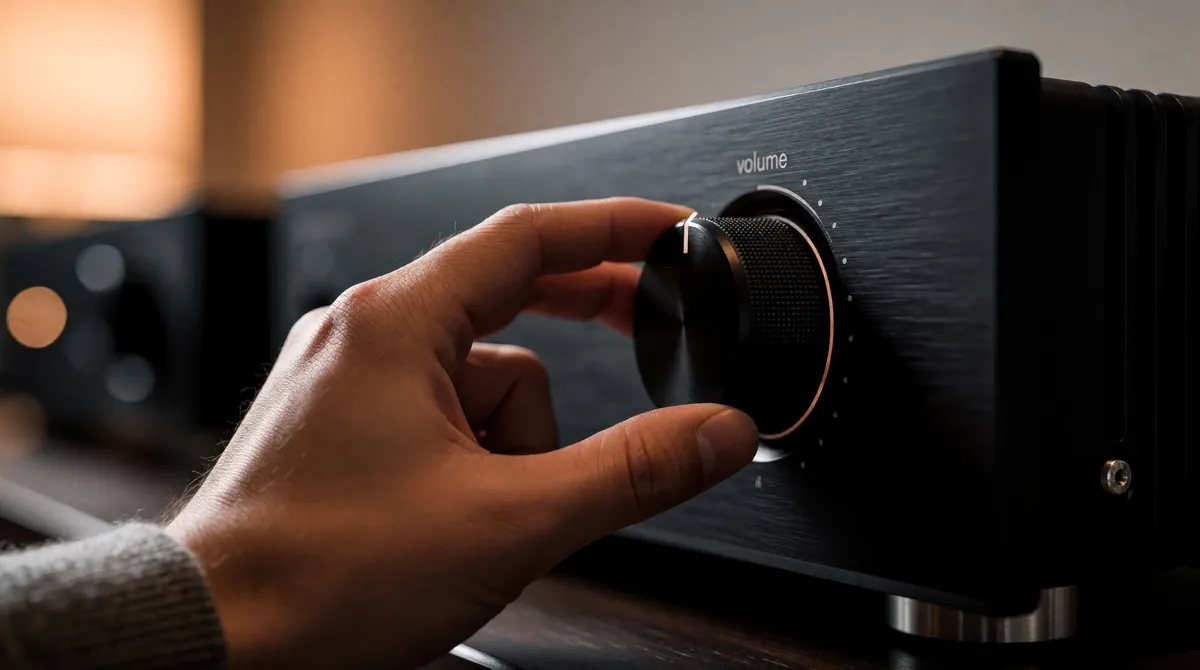
The DSP-Z11 keeps the sober, elegant styling of its predecessor intact (I will draw parallels between the two units) as well as its mechanical solidity, guaranteed by a 1.5 mm steel chassis and thick black anodized aluminum panels, although Yamaha has announced other finishes in titanium and gold. The front panel shows only the display, with orange characters that are easily legible from a distance, two large rotary knobs for source selection and volume control, separate power switches for on/off and standby, and a Pure Direct button. Pressing it turns off the display and takes the signal processing circuits out of service, sending the signal straight from input to output with only the volume control in the path.
The interior is a conglomerate of latest-generation technology, with Yamaha's celebrated Digital ToP-ART (Total Purity Audio Reproduction Technology) circuit topology combined with the best solutions for total isolation between the digital, analog and video circuits, signal paths that are as short as possible, and low-impedance amplification circuits using the proprietary High Current Amplification technology. The preamplifier stage incorporates a low-jitter PLL circuit, a VCXO master clock to reduce the possibility of jitter distortion, and 24-bit/192 kHz Burr-Brown DSD1796 digital-to-analog converters on all channels. The motorized volume control, with 0.5 dB steps, is digitally controlled.
The low-noise hybrid power supply consists of a superb classic-style transformer, two 27,000-microfarad capacitors and Schottky barrier diodes, which handle power delivery, filtering and rectification. Undoubtedly an excellent implementation, but sized somewhat on the low side (at least on paper, figures in hand), probably due to the DSP-Z11's lower output power per channel compared with its predecessor, the DSP-Z9. Frankly, I don't understand such a decision in the reference electronics of the respected firm with the three tuning forks, especially since an audiovisual integrated amplifier can never have too many amps. For the DSP-Z11, Yamaha states 140 watts (170 watts in the DSP-Z9) per channel for each of the seven main channels (2 front, 1 center, 2 surround and 2 surround back), and 50 watts for each of the four presence channels (2 front and 2 rear), specified according to strict RMS standards, into 8 ohms between 20 and 20,000 Hz. With the two active subwoofers it can support, we have no less than an 11.2-channel configuration, with which the Japanese firm takes its DSP concept to its ultimate conclusion thanks to the brand-new Cinema DSP HD3, for superior three-dimensionality in a more intense sound field across its 33 DSP programs, provided that loudspeakers are installed for the front and rear presence channels.
At this point I should remind you that Yamaha bases its DSP modes on digitizations of entirely real venues, after taking on-site measurements with in-house technology, instead of the matrixing and signal-"steering" solutions used by others. The matter is taken so seriously that the user can modify the original sound fields by changing the values of certain parameters affecting reverberation, early reflections, delays, etc., until a very believable ambience is achieved, suited to the dimensions of the listening room. There is a series of DSP programs designed specifically for listening to movie soundtracks, four of them in THX mode, for which our guest holds THX Ultra 2 certification. Silent Cinema DSP mode allows private multichannel listening through conventional headphones, with a good sense of surround sound when one of the Cinema DSP modes is engaged.
A TRUE AUDIOVISUAL CONTROL CENTER
The DSP-Z11 has all its papers in order to take on, without restrictions, all the technologies that have made high definition possible in both video and audio, and so it is compatible with the latest version, 1.3a, of the HDMI standard, with five inputs (one on the front panel) and two monitor outputs in this format. HDMI 1.3a supports the xvYCC color space, 30/36-bit color depth, 1080p/24Hz resolution, double refresh rate (100/120 Hz) and the Lip Auto-Sync function for automatically adjusting the offset between video and audio, among other things. For subsequent decoding, which guarantees compatibility with older codecs, the HDMI inputs accept digital data streams in the new Dolby Digital Plus, Dolby TrueHD, DTS-HD and DTS-HD Master Audio audio formats (see box).
The array of digital audio connections is completed by four inputs and one output in each of the S/PDIF and EIAJ-Toslink formats, whose bandwidth does not allow the transfer rates of the new codecs. As for analog audio, it has 5.1-channel inputs, one MM phono input (it has lost the DSP-Z9's compatibility with MC cartridges), nine line inputs and preamp outputs for 11.2 channels, plus four for recording. Analog video connectivity consists of four component (Y/Pb/Pr) inputs, five S-Video and as many composite video inputs, with various outputs, including monitor outputs, in each format. Video scaling and deinterlacing are handled by a second-generation ABT1018 processor from Anchor Bay Technologies, with 10-bit precision, independent horizontal and vertical scaling, and detection with automatic correction of the Chroma Upsampling Error (better known as the "chroma bug"). It allows conversion and scaling of analog video signals in any of their formats and resolutions up to 1080p, and downscaling to 480p/576p, so the display connected to an HDMI output will receive the best possible signal, matching its native resolution pixel for pixel.
The DSP-Z11's versatility extends to controlling three additional zones, with extensive configuration options among the main zone, Zone 2, Zone 3 and Zone 4. Two USB ports provide access to a LAN (local area network), allowing the amplifier to be connected to a music server or to listen to internet radio; to that end it supports PlaysForSure network devices and is compatible with Windows Vista, Yamaha MusicCAST (its MCX-2000 music server) and various audio codecs such as MP3, WMA and WAV. There is also a connection for the iPod via Yamaha's YDS-10 dock.
Setup is carried out through an elaborate graphical interface, somewhat confusing at first in the way it unfolds windows and options and validates them, but its tree structure is quickly understood. The menus are activated and navigated from the remote control, or from the unit itself using dedicated controls hidden behind the front panel door. An excellent idea in case the remote is "indisposed"; the remote itself is very good overall, with a small display and attractive touch-activated backlighting, and is complemented by another, smaller remote for normal operation of the amplifier.
Channel setup and calibration can be done the traditional way with a sound level meter or simply by ear, with 10 Hz steps for the crossover between 80 and 120 Hz, plus 40, 60, 160 and 200 Hz; or automatically using YPAO (Yamaha Parametric room Acoustic Optimizer) technology, with a supplied microphone that analyzes the environment, even from different listening positions, and calibrates the channels in a few minutes. When the automatic option is activated, the microphone captures test tones generated by the amplifier, with which YPAO analyzes the room acoustics, sets the appropriate equalization, determines the size of the loudspeakers, their distance to the listening position and their acoustic phase, and displays the results, which are surprisingly accurate. I ran the calibration twice with identical results; the distances to all the loudspeakers were exact and I only had to adjust the subwoofer output level, which was a little high for my taste. The steps are executed sequentially or as chosen by the user, and nothing prevents you from adjusting any value you disagree with. During subwoofer setup you choose between none, one mono subwoofer or two, assignable as right/left or front/rear.
Among the countless configuration options for the inputs, the pairing of video and audio inputs, the parameters of the 33 DSP modes, multi-zone operation, network access and so on, and their storage in different memories, I was struck by the presence of a comprehensive parametric equalizer for channel-by-channel fine-tuning. Between adjusting the DSP parameters and that equalizer, the user has a "toy" that guarantees quite a few hours of entertainment, if they intend to do things rigorously.
But there is more. There is an advanced setup that can only be activated from the amplifier itself, among whose options I would single out two for which Yamaha deserves a loud round of applause and a 10. With Preamp Mode=ON, the audio signals are only available at the Pre Out outputs, so our guest behaves exclusively as a preamplifier. Secondary options let you play with the power stages, now entirely free, by assigning them to other zones. With the second commendable option, setting Bi-Amp=ON makes the surround back channels work in conjunction with the front channels, allowing the associated loudspeakers to be bi-amplified. Simply brilliant. Other options allow the load impedance to be changed between 8 and 6 ohms, access to the RS-232 interface and acceptance of LAN commands with the unit in standby, the operating mode of the two fans, and a few other things. The RCA connectors are gold-plated, and the very good binding posts for all the loudspeakers accept bare wire and bananas once some plastic plugs, which are tricky to remove, have been taken out. But at Gaplasa they explained the following "trick" to me: screw a wood screw that fits the hole in the center of the plug in by one turn, and pull outward.
WORRIES DISPELLED
Before putting the DSP-Z11 into service for the listening tests, I felt a concern similar to the one I had with its predecessor, for identical reasons. When I agreed to test the DSP-Z9 I had serious doubts about its suitability for driving a set of very difficult loudspeakers such as the B&W 800 Matrix series in my system, hardly suited to integrated audiovisual electronics, even high-end ones. I soon dispelled those doubts and the DSP-Z9 showed its mettle, handling the complex load with ease, regardless of the position of the impedance selector (8 or 6 ohms). But as I mentioned, the DSP-Z11's capability is lower than its predecessor's, at least on paper, so the doubts assailed me again.
With this background I connected the speakers mentioned: two 802s as the main speakers, an HTM for the center channel, and two complex and difficult THX-certified SCM8 dipoles for the surround channels. For the surround back channels I connected two Sonus Faber Wall speakers, which are very easy to drive. To complete a 7.1 system, I used my ASW800 active subwoofer, also THX-certified, a real brute capable of generating 105 dB of continuous sound pressure without breaking a sweat. For playing Blu-ray and DVD-Video discs, a Pioneer BDP-LX70a player connected to the DSP-Z11 with an HDMI cable from DVIGear, both kindly lent for the occasion by the specialist store Clave Audio, plus my Mitsubishi HC-2000 projector for the necessary image display. After some initial tests with the DSP-Z11's default load impedance of 8 ohms, I took into account the 4-ohm nominal impedance of the Matrix speakers, played it safe to avoid problems and set the impedance selector to its other value, 6 ohms.
It was the first time I had listened to DTS-HD Master Audio soundtracks in my own room, from a demonstration Blu-ray disc released by DTS, with excerpts from Fantastic Four and Ice Age among others, in which the dynamics and the clean, brutal bass level struck me as utterly overwhelming. At times the sound pressure level was very high, and the DSP-Z11 handled it without batting an eyelid, so I discarded my initial prejudices about the complex speaker load. At first, that was what stood out most in the most powerful scenes, but it was in more relaxed passages of other movies, such as Kingdom of Heaven, that I really appreciated the superior resolution of this new codec, with a precision, clarity of detail and transparency in the dialogue that mark a before and after for me in home theater audio. It could not be clearer.
To confirm it, I only had to switch the DSP-Z11's audio input from HDMI to an S/PDIF input and listen to the same soundtrack decoded from the DTS core (good old DTS). DTS-HD Master Audio has raised high expectations among home theater fans, but studios such as MGM are releasing movies with uncompressed 5.1 PCM audio, or in other words, pure CD-DA audio across five channels plus another for low frequencies. The audio track of Casino Royale on Blu-ray is a clear example of its exceptional quality, with a transfer rate slightly higher than that of DTS-HD Master Audio, so the two are practically identical in performance, with no audible differences. Nevertheless, the "old" codecs still have a lot to say, and the classic Dolby Digital audio of Die Hard 4.0 truly shines with the DSP-Z11 in the most hard-hitting scenes of that explosive film, an expression never more apt. I did all the "movie" listening in THX Ultra 2 Cinema processing mode, for the invaluable benefits of THX's re-equalization and timbre-matching circuits, which tame the excess high frequencies of movie soundtracks (some of them really "shrill"), equalized for the dimensions of movie theaters.
The Pioneer BDP-TX70a is an excellent Blu-ray and DVD-Video player, but listening to CD-DA discs in Pure Direct mode did not quite convince me, so I replaced the Pioneer with my usual Marantz SA11-S1 SA-CD player. And now, yes, the playback of my usual favorites, Jacintha with her warm, sensual voice, Murray Perahia and his piano, Fabio Biondi and his Baroque repertoire, and Volodos with his stunning Rachmaninov 3, regained the high musical quality to be expected from high-end integrated audiovisual electronics. With the undeniable advantages of integration, the DSP-Z11 will amply meet the expectations of a broad range of enthusiasts who are put off by the complexity of separate components with their tangles of cables, and only the most purist will raise any objections, and few of them, believe me. Excellent loudspeakers that are not especially difficult to drive, very well suited to this electronics, are available on the market in every shape and color.
DTS AND ITS EXTENSIONS
The DTS (Digital Theater System) Coherent Acoustics encoder is an efficient, flexible and complex algorithm with an evolutionary data architecture, consisting of a core and a set of extensions that "surround" it, a structure that ensures full compatibility with all decoders, current or future. In a nutshell, because the subject has its complexities, the core is the familiar 5.1-channel DTS Digital Surround at 44.1 or 48 kHz that any DTS decoder can process. The extensions to the core contain other data relating to additional channels and higher sampling rates (namely DTS-ES and DTS 96/24), as well as the recent additions DTS-HD High Resolution and DTS-HD Master Audio. With this approach, any DTS decoder can access the core, but only the most advanced will access both the core and the corresponding extensions, which will be ignored by a decoder not designed for them, because it will not see them.
To give a practical example, a processor capable of decoding our old friend DTS will be able to access the DTS-HD Master Audio soundtrack of a movie on Blu-ray, but it will only extract the part it recognizes, the core, and carry out the typical lossy DTS Digital Surround data transfer at a rate of 1,536 Kbps, instead of the 24.5 Mbps of DTS-HD Master Audio. Unveiled at CES (Consumer Electronics Show) 2006 in Las Vegas, DTS-HD Master Audio is DTS's most advanced and powerful lossless data compression solution, whose information is identical, bit for bit, to that of the soundtrack master.
Yamaha DSP-Z11, Simply brilliant
Specifications
OUTPUT POWER 140 W x 7 channels + 50 W x 2 channels, RMS 8 ohms, 20-20,000 Hz. DYNAMIC HEADROOM 1.2 dB, 8 ohms. DAMPING FACTOR 150 on front channels, 8 ohms. INPUT SENSITIVITY AND IMPEDANCE Phono 3.5 mV, 47 kohms; line 200 mV, 47 kohms. MAXIMUM INPUT VOLTAGE Phono 60 mV; line 2.4 V. RATED OUTPUT VOLTAGE AND IMPEDANCE Audio out 299 mV, 900 ohms; pre out 1 V, 500 ohms; subwoofer 2 V, 500 ohms; zone out 1 V, 1.4 kohms. HEADPHONE JACK OUTPUT AND IMPEDANCE 150 mV, 100 ohms. FREQUENCY RESPONSE 10 Hz–100 kHz +/- 3 dB, front channels in Pure Direct. RIAA CURVE DEVIATION (PHONO) 0 +/- 0.5 dB. TOTAL HARMONIC DISTORTION 0.02%. SIGNAL-TO-NOISE RATIO Phono 81 dB on front channels; line, 100 dB on front channels. VIDEO FORMAT AND CONVERSION PAL/NTSC. VIDEO SIGNAL-TO-NOISE RATIO 70 dB. VIDEO FREQUENCY RESPONSE 5 Hz–100 MHz +/- 3 dB. MAXIMUM POWER CONSUMPTION 1,500 W. DIMENSIONS 435 x 210 x 497 mm. WEIGHT 34 kg. DISTRIBUTOR Gaplasa (917482960).
Price: €5,499
Keep reading
Vincent TAC 88, Tubes with nostalgia
WHAT MAKES TUBES SPECIAL Vincent gets the very best out of the well-known KT 88, in an attractive retro design. Price: €1,520…
Denon PMA-2010AE, Revelation
SINCE 1910... Denon has managed to surprise me with the build standard of this amplifier, the design ideas used in it and, of…
Cambridge Azur 640A, Deceptive looks
"Don't be fooled by its looks, and even less by its price. Excellent in every respect." Price: €499 Specialists' rating: 5 Text…
Dared MP-30B, The pleasure of tubes
The Dared MP-30B is a high-performance design at a truly irresistible price. Price: €1,125 Specialists' rating: 5 Text: Ramon…