TREATING A LISTENING ROOM
When we make a major investment in a high-end system, we think about the loudspeakers, the electronics or the cabling. But there is a crucial aspect that we often forget: the space in which we are going to place the system. In this article we show you some very useful guidelines that can turn an ordinary room into a good listening room.
THE ROOM
The first step is to work out the dimensions. Ideally, this should be done before buying the loudspeakers, but there are circumstances, such as moving house and the like, in which we will "bring" our system with us. The ideal room should not have dimensions that are multiples of one another (for example, 2.5 m high by 2.5 m wide and 5 m long); it is also important that its three axes (height, width and depth) differ as much as possible, that the walls are not parallel, and that windows are avoided (elements that spoil good acoustics). Since we rarely have ideal conditions, we have to try to avoid these problems by other means. No less important than the size of the room is its shape. The most common is a square or rectangular room, but there are other types of space, with irregular layouts (hexagonal shapes, curves, sloping attic ceilings), that are much better suited to installing a hi-fi system. In this respect, walls with irregular surfaces (textured plaster, stippling, etc.) help with acoustic treatment by preventing standing waves and unwanted reflections. A room shaped like a shoebox (which is, in essence and allowing for the differences, a small replica of reference concert halls such as the Concertgebouw, Symphony Hall or the Gewandhaus) will be better than one shaped like an "L" or a large square one, since the latter have the disadvantage of not providing enough early reflections to create a balanced sound.
Generally speaking, large rooms and those with irregular designs are more suitable for large loudspeaker systems, which have been engineered to support the transition between the different cabinets without needing help from the rear walls. Other types require the support of these walls to give weight to the sound.
In any case, we are going to stick to sizes within our readers' reach; a room of at least 20 m2 will be sufficient. Windows should always be covered with curtains, the thicker the better, to dampen extreme reflections and reverberation, which will result in better performance in the upper midrange of the audible spectrum.
The design of a loudspeaker in relation to the size of a listening room is of great importance. Generally speaking, small two-way loudspeakers, if well built, provide the best soundstage in small spaces. The reason is that they use the widest possible bandwidth of a driver of this kind (as long as the crossover does not introduce phase changes).
Acoustics should be treated as an important part of a hi-fi system, even decisive for the final sound. Some claim that in a high-end system the cables (power, interconnect and speaker cables), together with the acoustics of the room, account for 50% of the sound quality delivered by the system, so they must never be neglected. Perhaps that percentage is somewhat exaggerated, but there is no doubt about the importance of these aspects. The result will be much better with a well-cabled system installed in a room with carefully treated acoustics than with a higher-end one, with stock cables, in an untreated space.
Ideally, our system should blend well with the surroundings and the furnishings of the room. The best option for housing the system is furniture designed specifically for hi-fi (racks), although these can be somewhat expensive. If we don't have the space, if it doesn't match the rest of the décor, or if we simply don't have the budget, we can place the system on the room's existing furniture (bookcase, sideboard, etc.), always following a few important recommendations: it must be well ventilated, especially the amplifier or power amplifier, isolated from sources of heat and magnetic fields, and resting on a firm platform isolated from vibrations. We can buy individual platforms or even make them (6 mm hard plywood and 3 mm neoprene glued together to form a sandwich, on three cones at the base, or a granite slab, to date the most stable material, on three rubber feet or cones underneath) to place on the furniture, with the equipment in turn placed on them. The aim is to reduce the contact surface between the component and the shelf or floor, to isolate it from any vibration. Of course, if we intend to eliminate these defects, we should never place the monitors (if they are bookshelf models) on the same piece of furniture as the rest of the system. Although it may seem obvious, the space between the loudspeakers and the listening position must be left clear so that the sound arrives directly. If we opt for a dedicated hi-fi stand, we must take into account a few important factors, such as being as stable as possible (welded iron structures, composite fibers), resting on decoupling spikes (which reduce the contact surface with the floor), being well ventilated, having anti-vibration systems, etc.
The rest of the installation does not require any extraordinary changes from what we would normally have in any home. We should not overfill the room, as that would make it acoustically dead (we clap sharply and the sound dies away abruptly, with no resonance at all), nor leave it too empty (the same clap produces excessive reverberation, and the room sounds hollow). In both cases the sound is unnatural. An excess of highly reflective surfaces such as polished finishes, mirrors or glass should also be avoided. All that is needed is curtains on the windows, a few paintings and a rug (highly recommended, as it prevents unwanted reflections from the floor) between the loudspeakers and the listening position. This, together with the rest of the typical furniture (cabinets, sofas, tables, etc.), is a first step toward creating an environment with the right amount of absorption and reflection of sound waves. If we still have problems of this kind, a good solution is to hang small, separate pieces of fabric at random, away from the wall, to increase sound absorption. Another resource is to place decorative objects with convex shapes on the walls to scatter harmful reflections.
Let's never forget that any change or alteration in the room will always affect its acoustics in some way. We are talking about seemingly minor things such as hanging a new painting, moving a chair or adding a houseplant. However small they may be, they will alter the stereo image and the correct flow of the sound.
In installations with a larger budget, and if we have a spare room exclusively for our hobby, the ideal is to install absorbent panels and diffusers (available from specialist stores) in strategic places. The former are surfaces that absorb the entire frequency range equally, eliminating unwanted reflections. They can be placed behind the loudspeakers and in the corners. As for the latter, they are panels with irregular reliefs (the most common consist of small blocks of different heights arranged in a square pattern) to scatter the sound waves. They are placed on the wall between the two loudspeakers and at the sides of the listening position.
A dedicated power line for the audio system can also be run from the main electrical panel, avoiding the spikes and drops occasionally caused by other electrical appliances in the home. In this case, it is best to contact a specialist dealer who will help us treat the room correctly, as it is a somewhat more complex process.
THE LOUDSPEAKERS
To obtain the best three-dimensional image, a listening room should be well balanced symmetrically about the plane between the two loudspeakers.
This means that if one of them is in a corner, the other must be at the opposite end. If the symmetry is not correct, the first reflection from the wall behind one loudspeaker will be different from that of the other, and the critical zones of the stereo signal will be altered.
In addition, no object should be placed between the two loudspeakers. They must be positioned so that the tweeters are at ear level. The distance between the loudspeakers should not be greater than the distance from each of them to the listener, the well-worn equilateral triangle. It is also very important that there is enough space between our sofa and the wall behind us.
Finally, the tweeters should be aimed at the listening position. A normal rectangular room with untreated walls will have "flutter echoes" that reduce intelligibility. An excellent starting point for loudspeaker placement is to measure the diagonals of the listening room. We divide that measurement by three and place each loudspeaker at that distance from the corner along those lines.
We place the listening position centered between the two loudspeakers and roughly halfway between the loudspeakers and the wall.
Meanwhile, we can move the various objects about 30 cm at a time (looking for a significant distance so that the changes are not imperceptible) to see whether the sound can be improved. Although very precise devices exist for measuring acoustics, our ears can provide excellent guidance. To keep track of what we are doing, we can take notes. To remember exactly where we have placed the loudspeaker, a practical trick is to mark the floor with a needle and thread or electrical tape. Some loudspeakers should be aimed directly at the listener, while others work better facing straight ahead. Let's not hesitate to experiment.
If we reduce the distance between the loudspeakers, we must connect the sound pattern of both channels; it has to be seamless. In this way, we will obtain a panoramic sound with a very wide stereo image. This is particularly effective with the midrange frequencies. We must also always make sure that the positioning is as symmetrical as possible. If one of the loudspeakers is placed a few centimeters differently from the other, the soundstage becomes unbalanced, giving more presence to that channel.
ADJUSTING THE BASS
For a moderate bass response, the woofers should be as far as possible from the three walls (front, rear and side relative to each loudspeaker) of the room. In some cases, the line dividing the room into right and left halves should be considered a boundary of the room. In addition, the listener should be as far away as possible from the room's boundary walls.
All this is essential because a wall near a loudspeaker reinforces its bass at certain frequencies. If a loudspeaker is the same distance from all three walls, some frequencies will be emphasized much more than others. If we want more bass, we will need the support of the side and rear walls, moving the loudspeakers closer to them. As we experiment, we can adjust it to our own taste.
There are other solutions on the market, such as "tube traps" and "RPG diffusers", but in these cases we will need the help of professionals, who will carry out an acoustic study of the room to position these elements.
As a general rule, in a good room, the loudspeakers and the listener can be close to the room boundaries with minimal negative effects. In a bad room, a good strategy is to place both loudspeakers and the listener as far from the room boundaries as possible.
CABLING
A fundamental physical principle is that the further a signal travels, the more it degrades. This means that the shorter the cable, the better. With this in mind, the idea of running speaker cable all over the house is not as attractive as it first seems. In any case, for long distances, always use balanced XLR cable. For short distances, a quality RCA cable may be sufficient.
Knowing that cabling is a particularly controversial subject in the industry, we prefer to appeal to consistency. Whenever we have a high-end system, the cables, both interconnects and speaker cables, should be in keeping with the rest of the system. For strictly practical reasons, it is much easier to change loudspeakers with bananas or spades than with bare wire. What's more, bare wire degrades more easily.
In conclusion, it must be said that treating a room is not only a necessity for improving the performance of any system, but also a source of constant experimentation for all enthusiasts, who will be able to draw interesting conclusions that will be very useful when setting up future systems.
Keep reading
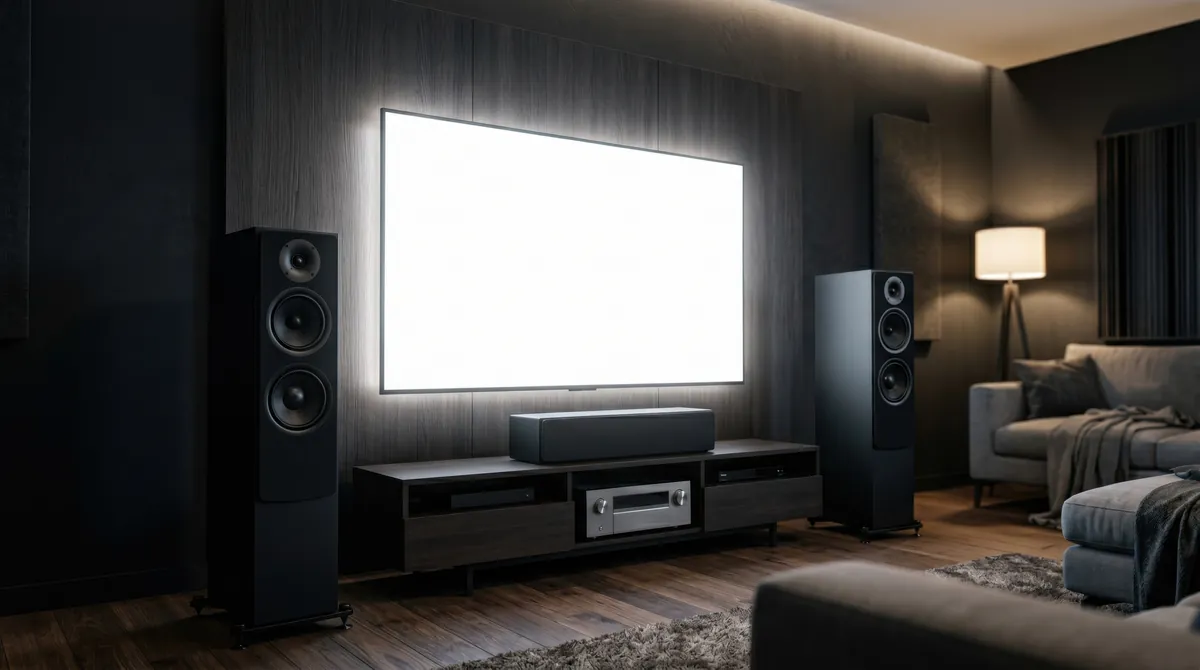
Sound projectors and soundbars
Lately, we have seen a large number of sound projectors and soundbars on the market. Users try to adapt their systems to the home…
Interlacing and deinterlacing
We often deal with video interlacing and deinterlacing, whether on the display, the source or the receiver. Handling and using…

SOUND WAVES. In every direction.
We have often talked about sound waves, but we have rarely looked in depth at what they really are, how they behave and the…
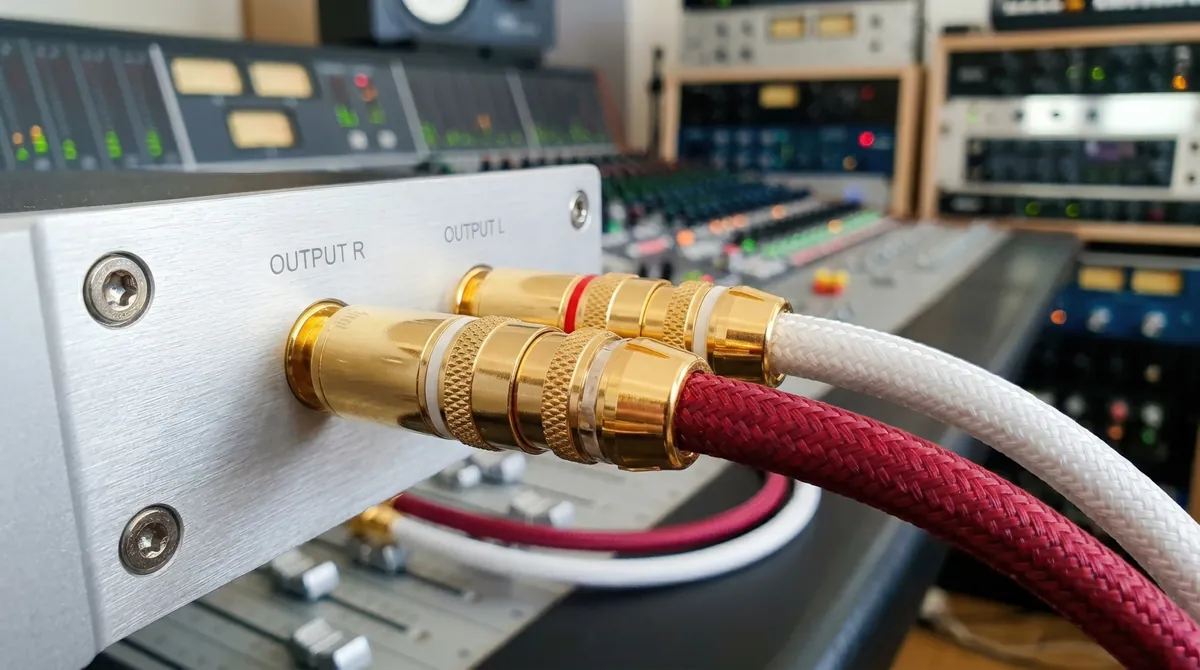
CLASS D AMPLIFICATION. New horizons.
Some technologies find wider application as time goes by. Originally, Class D amplification was not widely used in high-end…