Audiovector S6 AA, Audiovector's ultimate step
THE MULTICHANNEL TEST
- 'With the S6, my dreams came true after 30 years of designing loudspeakers,' says Ole Klifoth.
- Price: €17,000
- Specialists' rating: 6
- Text: Ramon Sendra
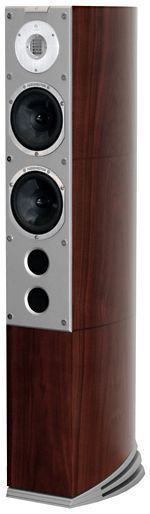 After reviewing Audiovector's entire Mi3 series for the previous issue, I was left wanting to do the same with the company's flagship model. When I traveled to the specialist store Macam (Barcelona) for those tests, they had a pair of S6 Avantgarde Arretés on display, but at the time we did not listen to them in the depth required.
Patrik Alvergard, the brand's distributor in Spain, did not want to leave any loose ends in response to our request for a proper review of this model, so he not only arranged another listening session for us but also managed to "bring over" Peter Stenberg, Sales Director at Audiovector, from headquarters in Denmark. Stenberg, besides making sure (it's his job) that ever more of the brand's speakers are sold, is a keen music and multichannel enthusiast, open to any criticism and ready to help whenever necessary.
The S6 series is the best Audiovector currently has to offer, and it also inherits the attractive option of upgrading from the "basic" Signature model to the Avantgarde and, finally, to the A. Arreté (the latter being the one we review here). This time we only tested the top model, but now in stereo and multichannel.
High technology
Like many other companies, Audiovector designs and builds a "flagship" or top-of-the-range model and from it expands its entire catalog with smaller models. We saw in the last issue that some of the technologies developed specifically for the S6 series are inherited, for example, by the Mi3 series (such as the tweeter or the midrange drivers).
We will also recall the perfectionist and minimalist spirit of its leader, Ole Klifoth, who, unable to find "his" ideal speakers, decided to build them. And one of the concepts he paid most attention to was minimal compression, which explains that superb 92 dB sensitivity. The secret is not only to design drivers whose excursion and electronics can achieve such a figure, but a better design of the enclosure's acoustic architecture that prevents the air compressed by the driver's excursion from impeding the diaphragm's movement. Audiovector calls this idea the Low Compression Concept.
The famous plinth of this series also comes into play; far from being merely a decorative touch, it provides the stability needed so that enclosure vibrations do not affect the audio reproduction at all, and it also acts as an "air outlet" (and therefore sound outlet) with a passive radiator.
The 3.5-way system is achieved with the help of the exclusive Avantgarde Ultra tweeter, capable, according to the company, of reaching 50,000 Hz. This means its sound exhibits a higher level of speed and detail. Unlike traditional dome or ribbon treble units, the device used by Audiovector is accordion-shaped, giving it a larger amount of air for reproducing those frequencies and, from a more technical point of view, preventing the formation of air pockets that, instead of reproducing sound, turn into "resistances".
As for the midrange drivers, we find an impeccable and meticulously executed design. From the use of materials that rapidly dissipate any heat generated, to diaphragm movement that is forceful yet continuous. These new-generation drivers can reach 7,000 Hz (with a flat response), although the crossover limits them well below that. At the very least, we can be sure that, up to the crossover point, the upper midrange will be reproduced in its full magnitude.
That leaves the crossover, also of curious design. Aware that a crossover usually means an enormous loss of power (efficiency is lost), Audiovector's engineers decided to seek a minimalist solution, which translates into the use of a single component in parallel per driver. Add up the facts mentioned so far and you will understand the secret of such high sensitivity, even at a nominal impedance of 8 ohms.
Tested
I carried out the test in one of MACAM Audiovisuales' new rooms in Barcelona.
Before the tests, Peter Stenberg took care to place the two S6 AAs in exactly the right position as the front pair. Source, audio/video processing and amplification were all by McIntosh, a brand I also promise to put on the test bench soon, given the superb results they delivered. Specifically, we used the recent MS300 as the music source, the MX135 preamp-processor and the MC207 7-channel power amplifier, all wired with Supra. One detail surprised me: for stereo applications, Stenberg preferred an analog RCA
link to a balanced connection, arguing that the latter, although it achieved a breathtaking opening-up of the soundstage, lost some definition in the center of the image.
We were still in the listening room when Stenberg and Alvergard suggested I try the system with my own discs, something they do during sales demonstrations as a reliable method (according to them) of showing that their designs are not limited to one particular type of music. So I started with Luis Robisco's Spanish guitar on "Tiempos", and I appreciated the tremendous definition in the midrange, with an extremely fast and forceful response. Even the tiniest details of the performer's nails tapping lightly on the wood were reproduced in full. A perfect front soundstage, placing the instruments where they belong on more dynamic tracks such as "Por qué no" or "Sin confusión". It reproduced the brutal dynamics of a Rammstein track (at Stenberg's express request) in all their magnitude and respected the deep voice of El Cigala on "Lágrimas Negras" alongside the invaluable piano of Bebo Valdés.
In these listening sessions I would highlight the deep bass, which can only be described as excellent, that the S6 AAs are capable of reproducing. Yet its majesty never blurs or hides (however dynamic and forceful the sound) a precise and tremendously fast lower midrange.
The treble is also very good, highly detailed and allowing a precise but not incisive front soundstage. Tonal coherence is absolute, and in no case, except the one I will describe next, is there any hole or lack of resolution. They are very good.
The only drawback, albeit a very slight one, was Silje Nergaard's deep, low-mid voice ("At First Light"), which, although it loses neither body nor solidity within the soundstage created, is not reproduced in all the splendor I have experienced with other speakers. That said, this one very slight detail cannot and should not detract from excellent reproduction of any musical recording, however different or unusual.
In other words, given how difficult it can sometimes be to find a loudspeaker as precise, dynamic, fast and forceful as this one for almost any type of music, the small detail mentioned will surely be history with the S8. Yes, S8.
As the flagship model from manufacturer Audiovector, I expected nothing less. Having familiarized myself with the Mi3 series, and with its results still in mind, I find that the S6 Avantgarde Arreté demonstrates its competence and mastery with equal clarity and authority. They are very versatile musically, and in multichannel they will deliver the spectacle every enthusiast expects from a loudspeaker system that is truly up to the task. They are a superb alternative to designs that are just as good but more expensive because they are better known.
THE MULTICHANNEL TEST
To the system above we added the center, two Mi3 Avantgarde surrounds and the Mi SUB subwoofer, keeping the McIntosh power amplification and preamp but adding a Pioneer DV-668 player. The result retains the authority of the stereo setup. The center convinces with its tonal coherence with the S6s, and these in turn with the precision and detail expected of them when the dynamics demand it. Peter wanted to surprise us with some multichannel music video sequences (from Nickelback and Robbie Williams concerts to the entertaining Animusic) but also movie material, such as one of the sequences from Toy Story 2. The sounds fill the room with a very cohesive ambience, well defined yet respectful of the directionality some productions demand. Clear voices with body, powerful bass and detail everywhere. The Audiovectors confirm one of the old sayings: what works for music also works for multichannel. Perfect.
Audiovector S6 AA, Audiovector's ultimate step
Specifications
Principle: 3.5-way. Impedance: 8 ohms. Sensitivity: 92 dB. Power handling: 400 W. Frequency response: 25 Hz to 45 kHz (+/- 2 dB). Connections: 3 pairs of binding posts (ready for three-way active amplification). Dimensions: 240x125x360 mm.
Weight: 98 kg. Finishes: American Maple, American Cherry and Rosewood.
Distributor: Corpaw
Price: €17,000
Keep reading
Jamo Concept Series, Invisible sound
In-wall speakers for a home theater Did you know it is possible to distribute quality sound throughout your home? Jamo offers its…
B&W CM1, A luxury mini-monitor
B&W achieves large-scale sound from an enclosure with a capacity of just 6.5 l. It's the CM1. Price: €800 Specialists' rating: 5…
Bolzano Villetri BC3003, The Italian Job
ROOM AND SPEAKERS: A DIFFICULT UNION Bolzano Villetri is a new loudspeaker manufacturer with truly novel and daring designs…
B&W XT4, The design era
A "VARIABLE" LISTENING POSITION Bowers&Wilkins announces a new series of well-equipped loudspeakers with distinctive styling…